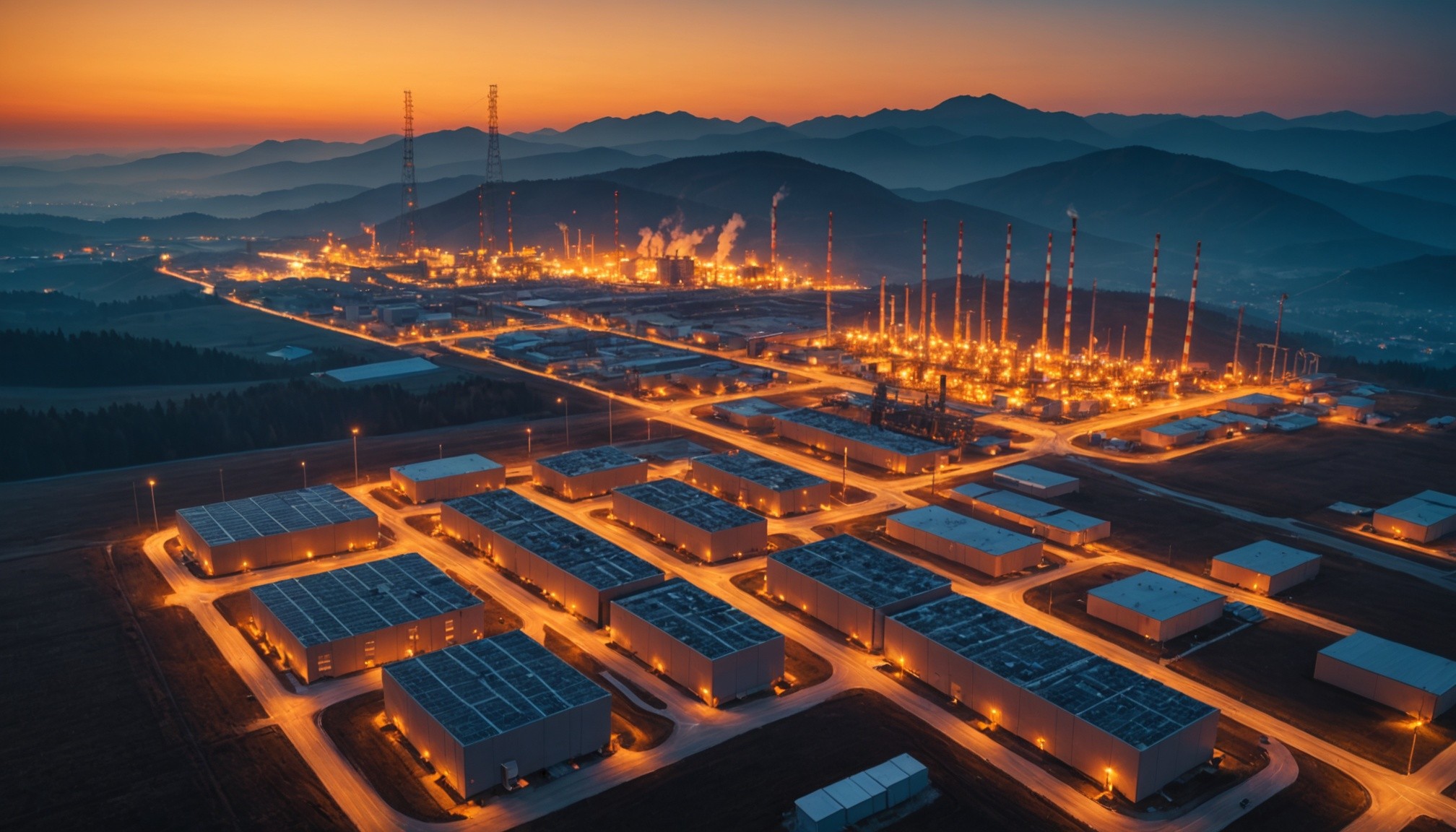
A new Harvard study reveals that 403 hyperscale data centres in the US consumed around 82 terawatt-hours of electricity between May 2024 and April 2025 — more than the annual use of 148 countries, including Austria, Israel, and Venezuela. This amount equals 1.8 percent of total US electricity consumption and exceeds the entire power draw of Michigan, a midsize US state.
The research, published in Nature Sustainability, estimates these facilities emitted 25.7 million metric tons of CO₂ — comparable to Denmark’s annual footprint. About 54 percent of the electricity came from gas and coal, with regional disparities playing a major role: data centres in coal-heavy Wyoming generated roughly seven times more emissions per kilowatt-hour than those in hydropower-rich Oregon.
Hidden emissions, growing demand
Hyperscale data centres, often linked to AI training and inference, are expanding rapidly. The average facility in the study was 40 megawatts — modest compared to new campuses now planned in the hundreds or even thousands of megawatts. The study does not include behind-the-meter power generation, where operators build private gas turbines onsite. BloombergNEF reports up to 189 gigawatts of such plants are in the pipeline, potentially increasing US emissions by 10 percent if all are built.
This blind spot makes accurate tracking difficult. Federal and state agencies do not require public reporting of data centre energy use. Utilities and operators treat consumption figures as proprietary, often protected by NDAs. As a result, researchers like Harvard’s Gianluca Guidi had to rely on satellite imagery and electrical capacity modelling to estimate usage — a workaround that underscores the lack of transparency.
Regional disparities shape climate impact
Location matters. Two data centres with identical workloads can have vastly different carbon footprints depending on their grid’s energy mix. Virginia, home to ‘Data Center Alley’, along with Oregon, Ohio, and Iowa, accounted for over half the energy use in the study. Virginia’s grid, still reliant on fossil fuels, amplifies emissions despite the state’s tech density.
MIT’s John Sterman notes that AI’s environmental cost isn’t fixed — it depends on energy sources. “Once you allow these data centres to emit the CO₂, you can never undo that,” he warns. Cornell’s Fengqi You adds that today’s infrastructure decisions risk “long-term carbon lock-in”, as power plants built now could operate for decades.
Policy gaps and transparency efforts
The US Energy Information Administration (EIA) has taken preliminary steps. It completed three pilot surveys on data centre power use across 10 states and is considering a voluntary national survey. However, without mandatory disclosure, reliance on estimates will continue.
A bipartisan bill in Congress could change that by requiring public reporting of energy use. Meanwhile, Guidi’s team is building a public website to track individual data centres’ environmental impact. Former EPA administrator Gina McCarthy called the study a crucial step toward informed policymaking: “Communities need reliable data on what these facilities mean for our air, health, and climate.”
What it means
For UK, UAE, and Kazakh tech leaders, the US data centre boom is a warning. Heavy reliance on fossil-fuel-powered computing undermines sustainability claims, especially for AI-driven services. Firms choosing cloud providers or building infrastructure should assess not just cost and performance, but also energy provenance and geographic footprint. The study confirms that carbon impact is not inherent to AI — it’s a function of energy choices.
In Kazakhstan, where data centre growth is nascent but energy is still largely coal-based, early policy decisions could avoid US-style lock-in. In the UAE and UK, where grid decarbonisation is advancing, locating compute in cleaner regions offers a strategic advantage. Transparency, not speculation, must guide procurement.
Tech founders and IT teams should demand energy disclosure from providers. As long as consumption remains hidden, true sustainability is impossible. The Harvard study proves that independent analysis can fill gaps — but it shouldn’t have to.