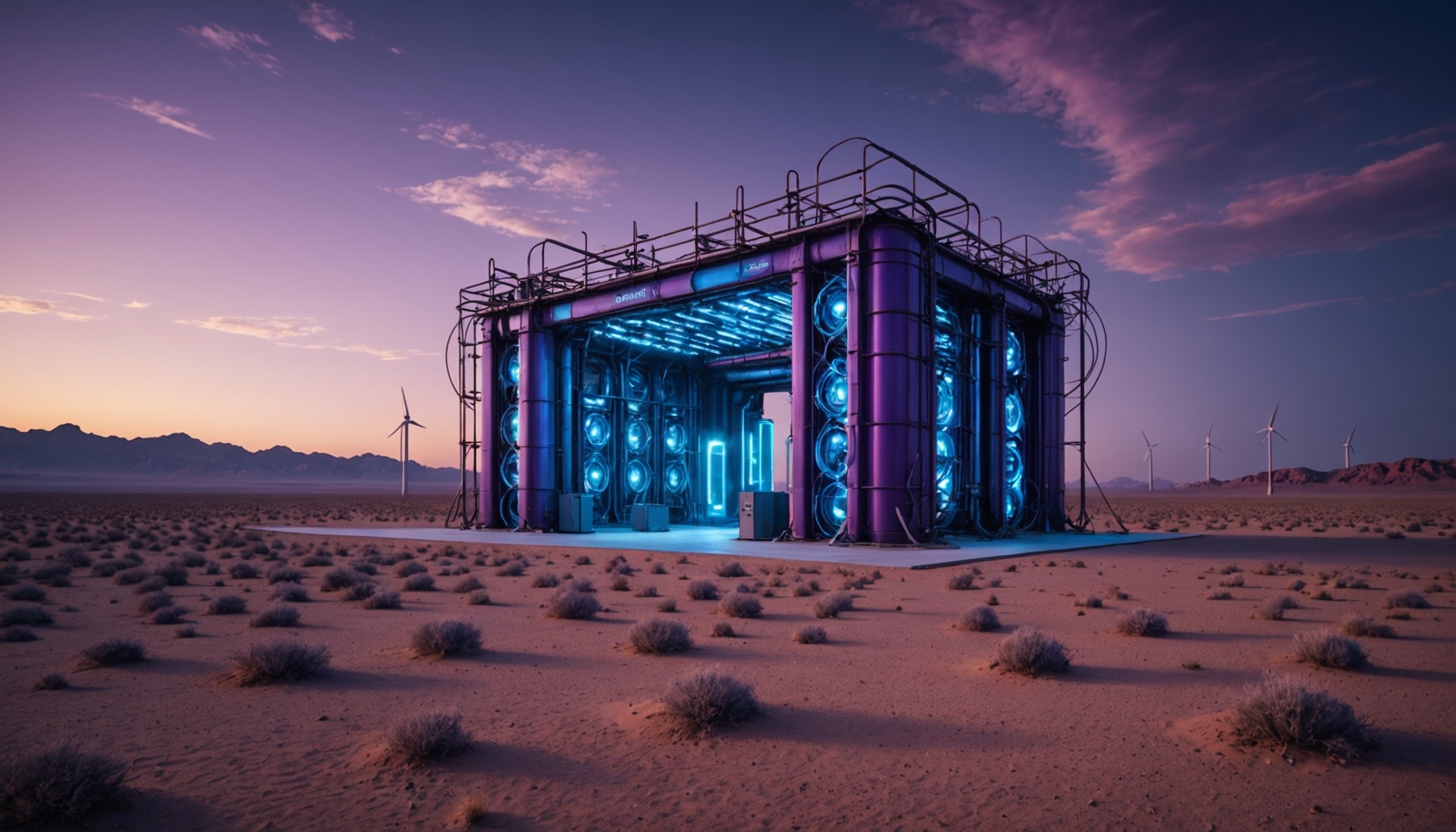
Vertiv has introduced the PowerNexus MV UPS, a medium-voltage outdoor uninterruptible power supply system tailored for AI data centres. The platform integrates UPS, fault ride-through, and AI-driven power smoothing at the utility interface, aiming to address grid delays, space constraints, and fluctuating loads. It claims up to 98.5% peak efficiency and, when paired with battery storage, can support four hours of backup—potentially reducing reliance on diesel generators.
Designed for grid and load volatility
The PowerNexus MV UPS is engineered to maintain Class 1 output voltage quality per IEC 62040-3, protecting against grid disturbances and upstream faults. This is critical for AI workloads, which can cause rapid, unpredictable power spikes. By stabilising supply during such fluctuations, the system helps prevent downtime and supports grid stability. Vertiv positions it as a solution for data centres facing long utility interconnection queues and indoor space limitations, allowing compute deployment to proceed without waiting for full infrastructure alignment.
Outdoor integration and simulation tools
As an outdoor-rated platform, PowerNexus frees up indoor space—valuable in high-density AI facilities. It is designed to work with long-duration energy storage, enabling extended battery-backed operations. Vertiv also offers a computer-aided design (CAD) model for power systems, allowing customers to simulate integration, validate performance, and assess dynamic grid interactions before deployment. This reduces integration risks and supports faster, more predictable project timelines.
Industry validation and future testing capacity
Vertiv has conducted proof-of-concept tests with QTS, SoftBank, and Rosendin at its Global Power R&D and Customer Experience Centre in Bologna, Italy. QTS reported successful validation of stable power delivery during dynamic load changes and voltage disturbances. The company also plans to establish a medium-voltage laboratory at the same site, enabling full-voltage testing, R&D, customer demonstrations, and service training for MV UPS, 800 VDC conversion, and battery storage systems.
Market competition and broader power trends
Vertiv is not alone in targeting this space. GE Vernova, Tesla, and On.energy have recently launched similar medium-voltage UPS products, reflecting growing demand for scalable, efficient power protection in high-power data centres. At the same time, the broader market is exploring alternatives to traditional UPS systems, including battery energy storage systems (BESS), rack-level batteries, buffer modules, and microgrids. BESS can extend backup duration beyond the typical 10–15 minutes of conventional UPS, while rack-level batteries save floor space. Buffer modules now support up to 20 seconds of ride-through, sufficient to start on-site generators in some cases.
What it means
For data centre operators in the UK, UAE, US, and Kazakhstan, PowerNexus represents a shift toward integrated, outdoor, and grid-interactive power infrastructure. It reduces dependency on diesel backup and indoor space, aligning with sustainability and density goals. However, its value depends on integration complexity and total cost of ownership compared to hybrid alternatives. Operators should assess whether a centralised MV UPS fits their architecture or if distributed solutions—like BESS or rack batteries—better suit their scalability and resilience needs. The rise of microgrids and on-site generation further suggests that future power protection will be hybrid, not monolithic.
The move reflects a broader industry shift: as AI drives power demands beyond traditional limits, infrastructure must evolve in efficiency, form factor, and flexibility. Vertiv’s offering targets this shift directly, but success will depend on real-world performance, cost, and compatibility with emerging standards like 800 VDC.
